
How to use Sponsored Display on Amazon?
Sponsored Display on Amazon allows you to target shoppers based on the pages the customer has viewed.
 Marc Marin 3 min read

Table of contents
1. What are Sponsored Displays on Amazon?
Amazon Sponsored Display ads allow us to target shoppers both on and off Amazon based on the specific detail pages the customer has viewed.
By showing ads to a narrow audience that has shown interest in our product (remarketing), Sponsored Display ads help us increase sales.
Why use Sponsored Displays on Amazon?
Sponsored Display ads are “retail aware” ads. They are displayed only if our products are in stock and the Featured Offer. Sponsored Display remarketing tools also automatically exclude customers who have already purchased the products we are advertising.
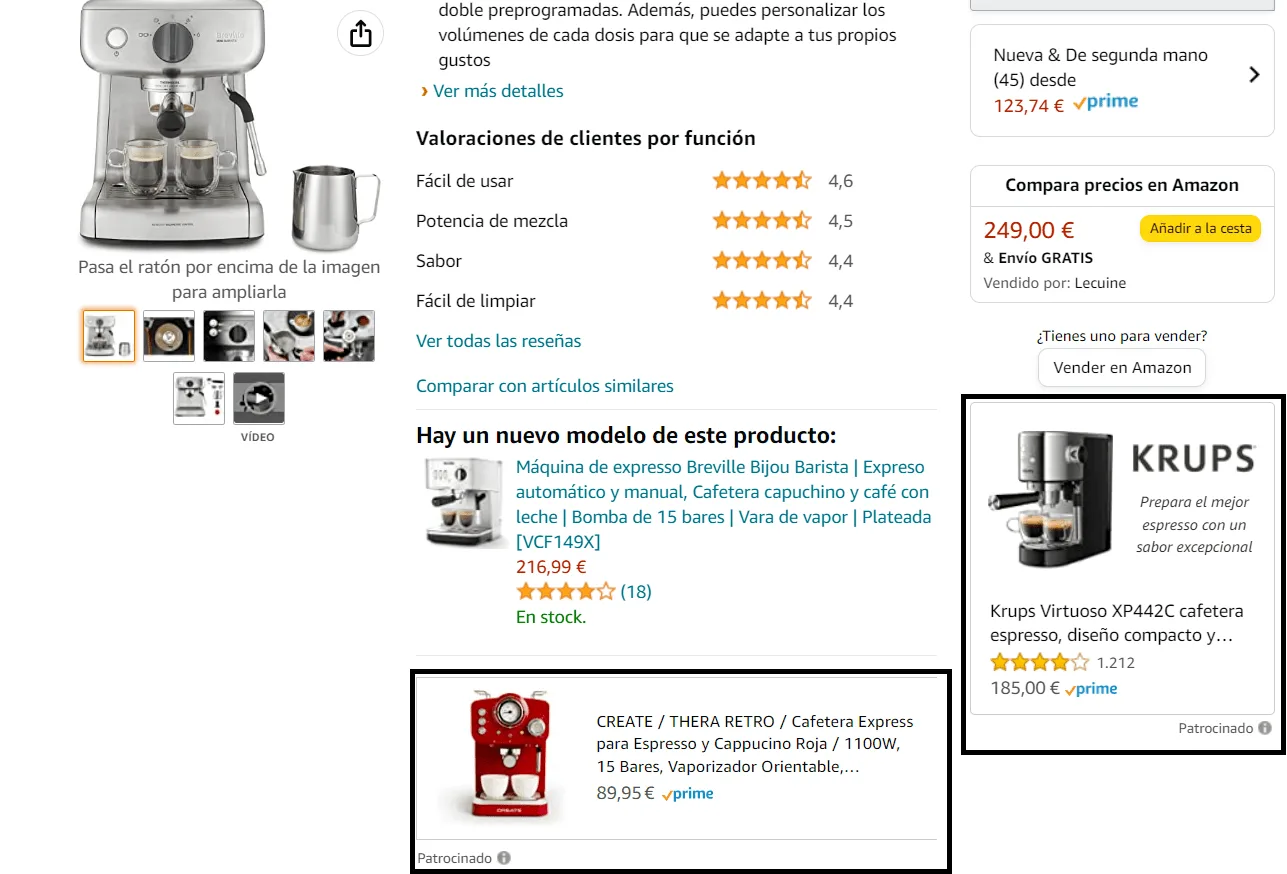
Below are more details on the two targeting approaches available through Sponsored Display ads: product targeting and view remarketing.
Product (ASIN or category) targeting
Using ASIN or category targeting, Sponsored Display ads can appear on:
-
Amazon product detail pages
-
Search results on desktop, mobile and the Amazon app
-
Amazon’s home page
Remarketing Views
Remarketing views allows us to re-engage customers who have viewed our product detail page or similar product and category detail pages in the last 30 days.
In addition to placements on Amazon (product detail pages, search results and the Amazon home page), view remarketing allows us to show ads outside of Amazon, on third-party websites and apps.
Because the potential customer has already expressed interest in the product category, there is a higher likelihood that they will make a purchase.
Even if the customer does not make an immediate purchase, remarketing our product to high-intent audiences is a powerful tool for building brand awareness and keeping the product top of mind for potential customers.
Setting up the Sponsored Display campaign on Amazon
We created the first Sponsored Display campaign with product targeting for offensive ASIN targets. For offensive ASIN targets, we targeted substitute and complementary products sold by our competitors.
To get an idea of who our competitors are, we typed some of the product description terms into the Amazon search bar and then browsed the results.
Offensive ASIN targets will give us the opportunity to tap into our competitors’ product detail page traffic or take their customers directly.
Save time in this process with our platform where Amazon sellers can save 60% of time optimizing product detail pages, be 50% more effective following Amazon’s Style Guidelines and increase their sales by 30%. Get a free audit and start optimizing your listings now! Take advantage of it.
FAQ: Sponsored Display on Amazon
What makes Sponsored Display ads different from other Amazon ad types?
Sponsored Display ads are “retail aware,” meaning they only display when your product is in stock and is the Featured Offer. They also automatically exclude customers who have already purchased the advertised product, focusing spend on genuine remarketing opportunities.
What are the two targeting approaches for Sponsored Display?
Product (ASIN or category) targeting shows ads on Amazon product detail pages, search results, and the Amazon home page. Remarketing views re-engage customers who viewed your product detail page or similar products in the last 30 days, both on and off Amazon.
Can Sponsored Display ads appear outside of Amazon?
Yes. View remarketing lets you show ads on third-party websites and apps to customers who previously viewed your product detail pages, extending your reach beyond Amazon’s own placements.
What is “offensive ASIN targeting” in Sponsored Display?
Offensive ASIN targeting means bidding on competitors’ product detail pages to intercept their traffic. You identify competitors by searching your own product’s key terms on Amazon and reviewing the top results.
Does Sponsored Display work if a customer doesn’t buy immediately?
Yes. Even without an immediate purchase, remarketing to high-intent audiences builds brand awareness and keeps your product top of mind, increasing the likelihood of a future purchase.