
Amazon Retail Media: How to boost your sales on Amazon?
Discover how Retail Media transforms advertising! Boost visibility, target audiences, and drive sales with expert tips.
 Marc Marin 3 min read
Table of contents
Retail media has become a transformative force in the advertising world, blending the power of e-commerce platforms with advanced marketing techniques. In this article, we’ll explore everything you need to know about retail media, from its definition and evolution to actionable strategies that help businesses thrive. Whether you’re new to the concept or looking to refine your approach, this guide offers a comprehensive look at how retail media is reshaping the digital advertising landscape. Let’s dive in!
What is Retail Media?
Retail media refers to the advertising and marketing strategies employed within retail platforms to directly reach consumers during their shopping journey. This approach involves leveraging first-party data from retailers to target ads with high precision. It includes tactics such as sponsored ads, display advertising, and video campaigns placed on a retailer’s website, app, or even external networks. Key features of retail media include:
-
Highly targeted advertising: Uses insights from customer data to deliver personalized ad experiences.
-
First-party data usage: Enables precise segmentation based on shopping behaviors, purchase history, and demographics.
-
Multiple ad formats: Includes banners, sponsored listings, and native ads seamlessly integrated into the platform.
The rise of Retail Media
Retail media has seen exponential growth in recent years, driven by changes in consumer behavior and advancements in technology. Here’s why it’s becoming indispensable:
-
Shift to e-commerce: With the rise of online shopping, retailers have become digital hubs for product discovery.
-
Decline of third-party cookies: Retailers’ first-party data provides a reliable alternative for advertisers to connect with audiences.
-
Integrated shopping experience: Retail media connects advertising efforts directly to purchase opportunities, shortening the customer journey.
Why Retail Media matters for businesses
Retail media offers a unique opportunity for brands to connect with their target audience at the moment of purchase intent. Here’s why it’s crucial:
-
High purchase intent environment: Ads are placed where customers are already searching for products, increasing conversion potential.
-
Precise audience segmentation: Retail media networks allow granular targeting to ensure ad relevance.
-
Real-time measurement: Advertisers can analyze campaign performance and adjust strategies for maximum ROI.
-
Retailer-advertiser synergy: Brands benefit from direct access to retail environments, creating opportunities for cross-promotion and enhanced visibility.
Key terminology
Understanding the core terms of retail media is essential to navigate this growing industry:
-
Retail Media Networks (RMNs): Platforms operated by retailers to offer advertising opportunities to brands. Examples include Amazon Advertising, Walmart Connect, and Target Roundel.
-
First-party data: Data collected directly by retailers from their shoppers, used for precise targeting.
-
Sponsored Listings: Paid product placements that appear at the top of search results or product categories.
-
Contextual targeting: Displaying ads based on the context of the shopper’s journey, such as product categories or search terms.
Evolution
The evolution of retail media mirrors the digital transformation of retail:
-
Early Days: Simple in-store promotions like shelf placements and end-cap displays.
-
Digital Shift: The rise of online marketplaces brought sponsored product ads and banners.
-
Current Trends: Integration of AI, programmatic advertising, and immersive formats like interactive videos and shoppable ads.
Amazon: the retail media network that dwarfs the rest
When people say “retail media,” they are usually talking about Amazon whether they realize it or not. Amazon’s advertising business generated $68.5 billion in 2025 — more than Walmart Connect, Target Roundel, Instacart Ads and every other RMN combined, and enough to make it the third-largest digital ad platform globally after Google and Meta. Source: Business of Apps 2026
That scale is why “retail media strategy” and “Amazon Advertising strategy” are, for most brands, the same conversation. The formats map directly onto the terminology above:
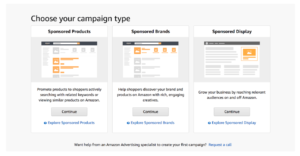
- Sponsored Listings on Amazon means Sponsored Products and Sponsored Brands — placements at the top of search results and on competitor product pages.
- Contextual targeting is what Sponsored Display does — showing your ad based on the category or product a shopper is already looking at.
- First-party data at scale is Amazon DSP: programmatic ads built on purchase history that follow shoppers across the web, not just inside Amazon.
See the full breakdown of what each Amazon Ads format does and which account type unlocks it if you’re deciding where to start.
Running these as disconnected campaigns — one team on search ads, another on DSP, budgets set once a month — is the single biggest reason retail media spend underperforms. The formats are built to reinforce each other: DSP builds awareness, Sponsored Products captures the resulting search demand, and the sales both generate feed Amazon’s ranking algorithm, lowering the cost of the next click.
What that looks like with the budget actually coordinated: Duérmete Online, a furniture and home brand, ran AI-managed campaigns across four brands on Amazon and cut its advertising cost of sale from 18.31% to 12.92% — a 5.39-point improvement — while click-through rate rose 21% and conversion rate climbed from 3.94% to 4.31%. The brand scaled from €300K to €20M in five years on the back of that coordination. Read the full case study.
FREE SESSION
See your Amazon retail media spend as one system, not five campaigns.
7 days free · no card · your own data
FAQ: Retail Media
What is retail media?
It’s the set of advertising and marketing strategies used within retail platforms to reach consumers during their shopping journey, leveraging first-party retailer data to target ads with high precision through formats like sponsored ads, display advertising, and video campaigns.
What are Retail Media Networks (RMNs)?
They are platforms operated by retailers — such as Amazon Advertising, Walmart Connect, and Target Roundel — that offer advertising opportunities to brands using the retailer’s own first-party shopper data.
Why is first-party data so central to retail media?
First-party data, collected directly by retailers from their own shoppers, enables precise segmentation based on shopping behaviors, purchase history, and demographics — and it has become even more valuable as third-party cookies decline.
How has retail media evolved over time?
It moved from simple in-store promotions like shelf placements and end-cap displays, through the digital shift that brought sponsored product ads and banners, to today’s integration of AI, programmatic advertising, and immersive formats like interactive and shoppable video.
Why is retail media becoming indispensable for businesses?
It combines a high purchase-intent environment, precise audience segmentation, and real-time performance measurement, letting advertisers connect directly with customers at the moment they are ready to buy.
Is Amazon Advertising the same thing as retail media?
Amazon Advertising is the largest single retail media network by revenue — $68.5 billion in 2025, ahead of every other retailer’s ad business combined. Its formats (Sponsored Products, Sponsored Brands, Sponsored Display, DSP) map directly onto the sponsored listings, contextual targeting and first-party data targeting that define retail media in general, which is why for most brands the two strategies converge.