
AI Transforms E-commerce 2026: The New Reality
See how AI transforms e-commerce 2026. Explore the shift from AI experimentation to execution, driving efficiency and widening the competitive gap.
 Carlos Martínez Barriga 4 min read
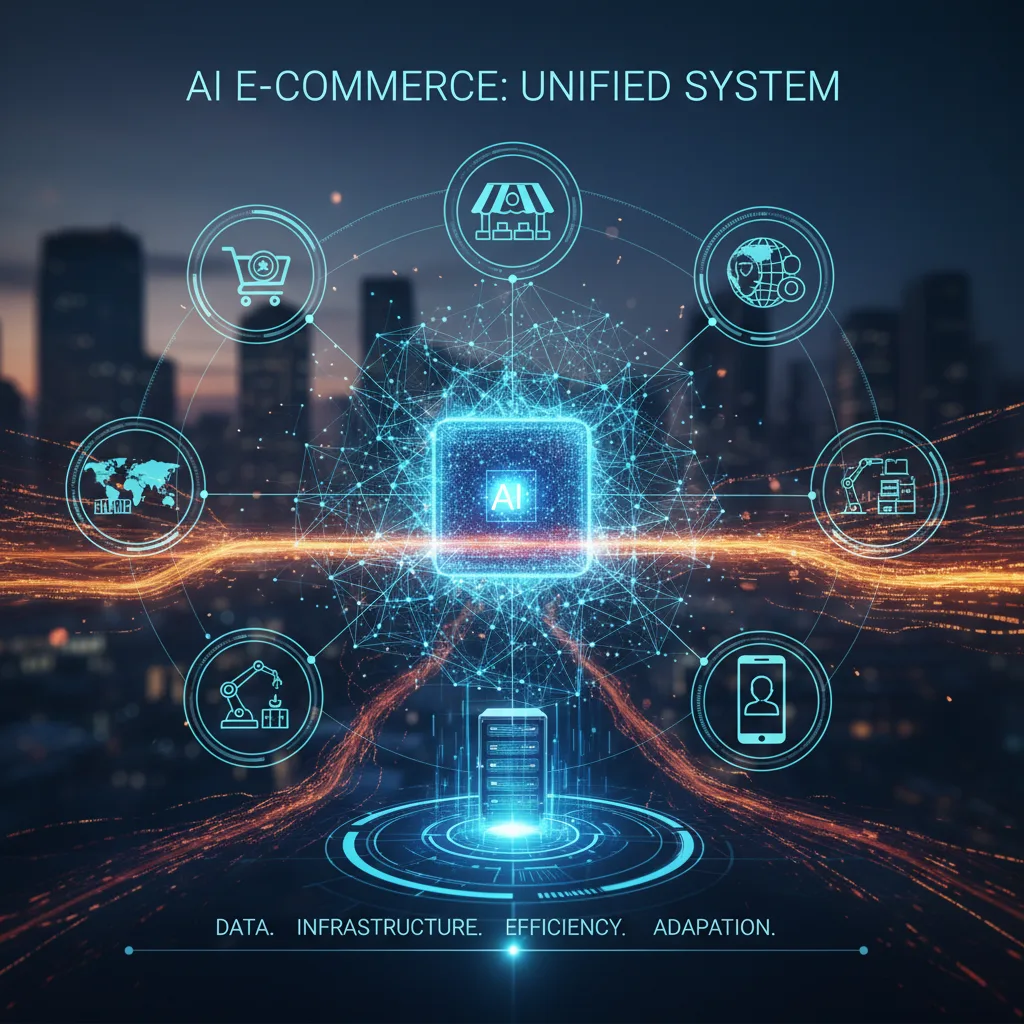
Executive Summary:
- The ‘2026 State of AI in E-Commerce’ report by Stord, published by Practical Ecommerce, reveals a critical shift from AI experimentation to large-scale execution in the e-commerce sector.
- A significant performance gap is emerging between brands actively implementing AI and those merely discussing it, fundamentally changing how AI transforms e-commerce 2026.
- Key areas benefiting from AI integration include improved forecasting, optimized inventory placement, and enhanced delivery processes, leading to measurable efficiency gains.
- The report highlights that organizations managing over $10 billion of commerce annually, like those leveraging Stord’s solutions, are at the forefront of this AI-driven evolution.
- Common pitfalls identified include fragmented tools, siloed data, and inadequate infrastructure, underscoring the need for integrated, system-level intelligence.
- Consumer expectations for speed, transparency, and personalization are increasingly shaped by AI capabilities, driving the urgency for brands to adapt.
Table of contents
The landscape of online retail is undergoing a profound transformation, spearheaded by the pervasive integration of artificial intelligence. As we approach the mid-point of the decade, the assertion that AI transforms e-commerce 2026 is no longer a futuristic prediction but a present reality, as detailed in the recent ‘2026 State of AI in E-Commerce’ report by Stord. This comprehensive analysis, drawing on proprietary findings and real-world implementation data, serves as a crucial guide for leaders navigating the complexities and opportunities presented by AI’s rapid evolution within the commerce ecosystem. The era of hesitant exploration has concluded, giving way to a period where tangible execution of AI strategies dictates competitive advantage and market leadership.
Analysis
Stord’s authoritative report, featured by Practical Ecommerce, meticulously dissects how AI is actively reshaping core e-commerce functions. It identifies how advanced brands are leveraging AI to refine critical operational aspects such as demand forecasting, ensuring inventory is precisely where it is needed, and streamlining delivery networks for optimal efficiency. This strategic application of AI directly translates into substantial operational efficiencies and a superior customer experience. The report emphasizes the widening chasm between enterprises that have effectively deployed AI at scale and those still grappling with initial stages, highlighting a clear competitive divergence. Furthermore, it addresses the challenges associated with unsuccessful AI integration, citing critical issues like the persistence of fragmented technological tools, isolated data repositories, and insufficient infrastructure. These factors often impede the successful ‘AI-enablement’ of a brand’s tech stack, demonstrating that successful deployment necessitates a holistic approach to data and system integration. This deep dive into practical application illustrates vividly how AI transforms e-commerce 2026 from a theoretical concept to a tangible, performance-enhancing reality.
Why it matters
The implications of this AI-driven revolution are far-reaching, impacting every facet of the e-commerce value chain. For executives, understanding how AI transforms e-commerce 2026 is essential for crafting resilient long-term technology and operational strategies. Marketing and commerce leaders must recognize AI’s role in driving growth through hyper-personalized customer experiences and targeted demand generation. Operators, tasked with daily performance, will find AI indispensable for optimizing fulfillment and logistics, managing complex supply chains, and achieving new benchmarks in efficiency. The report underscores that consumer expectations are rapidly evolving, with a growing demand for instantaneous speed, complete transparency, and hyper-personalized interactions, all powered by AI. Brands that fail to move beyond rudimentary point solutions towards an integrated, system-level intelligence risk obsolescence. Stord, as ‘The Consumer Experience Company,’ exemplifies the type of entity providing end-to-end commerce enablement, managing over $10 billion in commerce annually. Their robust suite of fulfillment services and e-commerce technology, including advanced order and warehouse management systems, demonstrates the practical application of AI to bridge intelligence, infrastructure, and execution. This integrated approach will define success for the brands that thrive in the competitive e-commerce landscape of 2026 and beyond, marking a true paradigm shift.
FAQ: How AI Transforms E-commerce in 2026
What is the “performance gap” mentioned in the 2026 State of AI in E-Commerce report?
It is the widening divergence between brands that have moved from AI experimentation to large-scale execution and those still merely discussing AI adoption. The report frames this gap as a defining competitive divide in e-commerce for 2026 and beyond.
Which operational areas benefit most from AI according to the report?
The report highlights demand forecasting, inventory placement, and delivery network optimization as the areas seeing the most measurable efficiency gains from AI integration, directly translating into operational efficiencies and a better customer experience.
What common mistakes cause AI e-commerce initiatives to fail?
The report points to fragmented technological tools, isolated data repositories, and insufficient infrastructure as the recurring reasons AI-enablement efforts stall. Brands need a holistic approach to data and system integration rather than relying on disconnected point solutions.
How are consumer expectations changing because of AI in e-commerce?
Consumers increasingly expect instantaneous speed, complete transparency, and hyper-personalized interactions, all powered by AI. The report warns that brands failing to move beyond rudimentary point solutions toward integrated, system-level intelligence risk falling behind on these evolving expectations.