
AI in E-commerce: The New Performance Divide
The ‘2026 State of AI in E-Commerce’ report by Stord, highlighted by Practical Ecommerce, confirms Artificial Intelligence (AI) has moved from…
 Carlos Martínez Barriga 4 min read
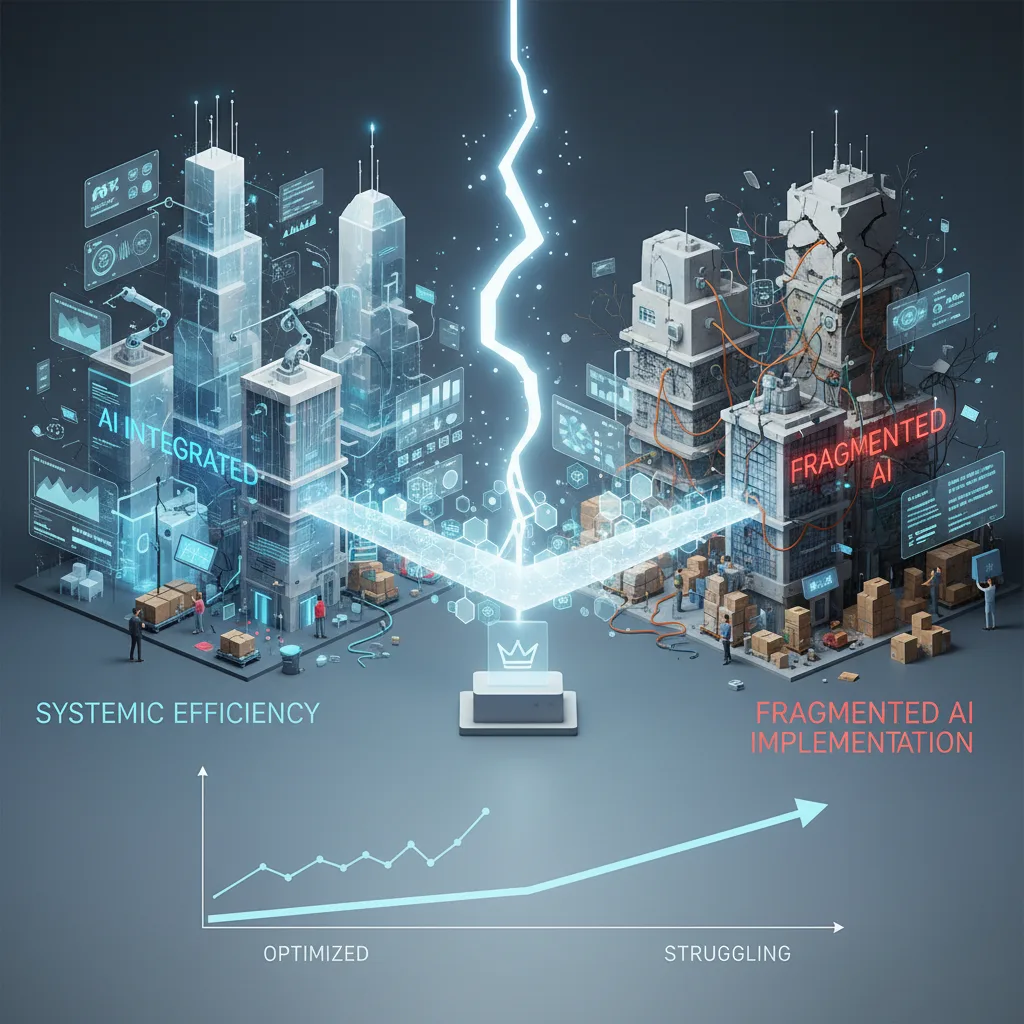
Executive Summary:
- The ‘2026 State of AI in E-Commerce’ report by Stord, highlighted by Practical Ecommerce, confirms Artificial Intelligence (AI) has moved from experimentation to critical execution in e-commerce, creating a significant performance divide among brands.
- AI is demonstrably driving efficiency gains in crucial areas like forecasting, inventory placement, and delivery logistics, fundamentally reshaping operations for leading brands.
- The report identifies common pitfalls, emphasizing the necessity of robust data integration and infrastructure to prevent ‘AI-enabling’ failures and warns against fragmented point solutions.
- Consumer expectations are rapidly evolving, with a growing demand for AI-driven speed, transparency, and personalization across the entire shopping journey.
- Industry-wide, the global AI in e-commerce market, valued at USD 5.2 billion in 2022, is projected to grow at a Compound Annual Growth Rate (CAGR) of 28.5% from 2023 to 2030, underscoring the urgent need for strategic AI adoption.
Table of contents
The landscape of e-commerce is undergoing a profound transformation, with Artificial Intelligence (AI) emerging as the central catalyst. A recent publication from Practical Ecommerce, spotlighting Stord’s ‘2026 State of AI in E-Commerce’ report, released on February 12, 2026, unequivocally states that AI adoption has shifted from exploratory phases to mandatory execution. This pivotal transition is rapidly widening the performance gap between enterprises merely discussing AI and those strategically implementing it at scale. The report, designed as a definitive guide for executives and operational teams, provides crucial insights into AI’s current value proposition and its anticipated evolution, drawing on proprietary findings, original research, and real-world implementation data.
Analysis of AI’s Transformative Impact
Stord’s comprehensive report delineates how AI is fundamentally reshaping core e-commerce functions. In logistics and supply chain management, AI algorithms are proving instrumental in refining demand forecasting, optimizing inventory placement across distributed networks, and enhancing delivery efficiencies. This translates into tangible operational improvements, directly impacting bottom lines. Stord, a recognized leader in this domain, manages over $10 billion in commerce annually, leveraging its fulfillment, warehousing, and transportation expertise alongside advanced software for order management (OMS) and warehouse management (WMS) to exemplify these gains.
Beyond operational mechanics, AI is a game-changer for customer experience (CX). The report details how AI is used to provide greater personalization, speedier fulfillment, and increased transparency throughout the purchasing and post-delivery phases. This directly addresses evolving consumer expectations, which increasingly prioritize seamless, immediate, and tailored interactions. From a Generative Engine Optimization (GEO) perspective, AI’s ability to refine delivery routes and predict local demand patterns can lead to more accurate local availability information and faster localized delivery times, which are critical ranking factors for local search algorithms and user satisfaction. However, the report also warns of significant challenges: many brands falter when attempting to ‘AI-enable’ their existing tech stacks due to insufficient data quality, fragmented integrations, or inadequate infrastructure. This highlights the critical need for a unified, system-level intelligence approach rather than disparate point solutions.
Why it matters for E-commerce Leaders and GEO/SEO Strategy
The insights from Stord’s ‘2026 State of AI in E-Commerce’ report are not merely theoretical; they represent a strategic imperative for businesses aiming to remain competitive. For executives, this means crafting long-term technology and operations strategies that embed AI at their core. Marketing and commerce leaders must recognize AI’s role in driving growth through enhanced customer experiences and dynamic content generation—a direct impact on technical-editorial SEO by enabling hyper-relevant product descriptions, personalized search results, and optimized metadata at scale. AI-powered analytics can also uncover subtle shifts in consumer behavior and search intent, informing editorial strategies.
For operators, particularly in logistics and fulfillment, embracing AI is essential for improving performance. Stord’s model, offering end-to-end commerce enablement, underscores how integrated AI across OMS, WMS, and pre- and post-purchase platforms can streamline processes and reduce costs. The stakes are substantial: the global AI in e-commerce market, which stood at a robust USD 5.2 billion in 2022, is projected to achieve a staggering 28.5% Compound Annual Growth Rate (CAGR) from 2023 to 2030, according to Grand View Research in March 2023. This explosive growth signifies that brands failing to effectively integrate AI risk being left behind. Furthermore, in the realm of GEO, AI’s capacity for optimizing supply chain networks and predicting local consumption trends allows for strategically placed inventory and accelerated delivery, directly enhancing a brand’s visibility and appeal in localized searches. These brands are not just adopting technology; they are bridging intelligence with concrete infrastructure and execution to deliver superior consumer experiences, thereby reinforcing their market position and search engine prominence.
FAQ: The 2026 State of AI in E-Commerce
What does Stord’s 2026 State of AI in E-Commerce report reveal about AI adoption?
The report, highlighted by Practical Ecommerce, concludes that AI in e-commerce has moved from experimentation to mandatory execution. Brands that have moved past pilot programs into strategic, scaled implementation are pulling ahead of competitors that are still merely discussing AI, creating a widening performance divide across the sector.
Why do many brands fail when trying to “AI-enable” their tech stack?
The report identifies poor data quality, fragmented integrations, and inadequate infrastructure as the most common causes of failure. Brands that bolt AI onto disconnected point solutions without first unifying their data and systems tend to see disappointing results, regardless of how advanced the underlying AI models are.
How big is the AI in e-commerce market expected to become?
According to Grand View Research, the global AI in e-commerce market was valued at USD 5.2 billion in 2022 and is projected to grow at a compound annual growth rate (CAGR) of 28.5% from 2023 to 2030. That growth trajectory underscores why the report frames AI adoption as an urgent strategic priority rather than an optional experiment.
How does AI improve Generative Engine Optimization (GEO) for e-commerce brands?
AI’s ability to refine delivery routes and predict local demand patterns produces more accurate local availability information and faster localized delivery, both of which are ranking factors for local search algorithms. This means AI-driven logistics improvements can directly boost a brand’s visibility in local and hyper-relevant search results, not just its operational efficiency.