How a Pro Writer Uses AI for Efficiency & Quality
Discover how a pro writer uses AI to boost efficiency, overcome limitations, and master content creation with strategic prompts and human oversight.
 Carlos Martínez Barriga 4 min read
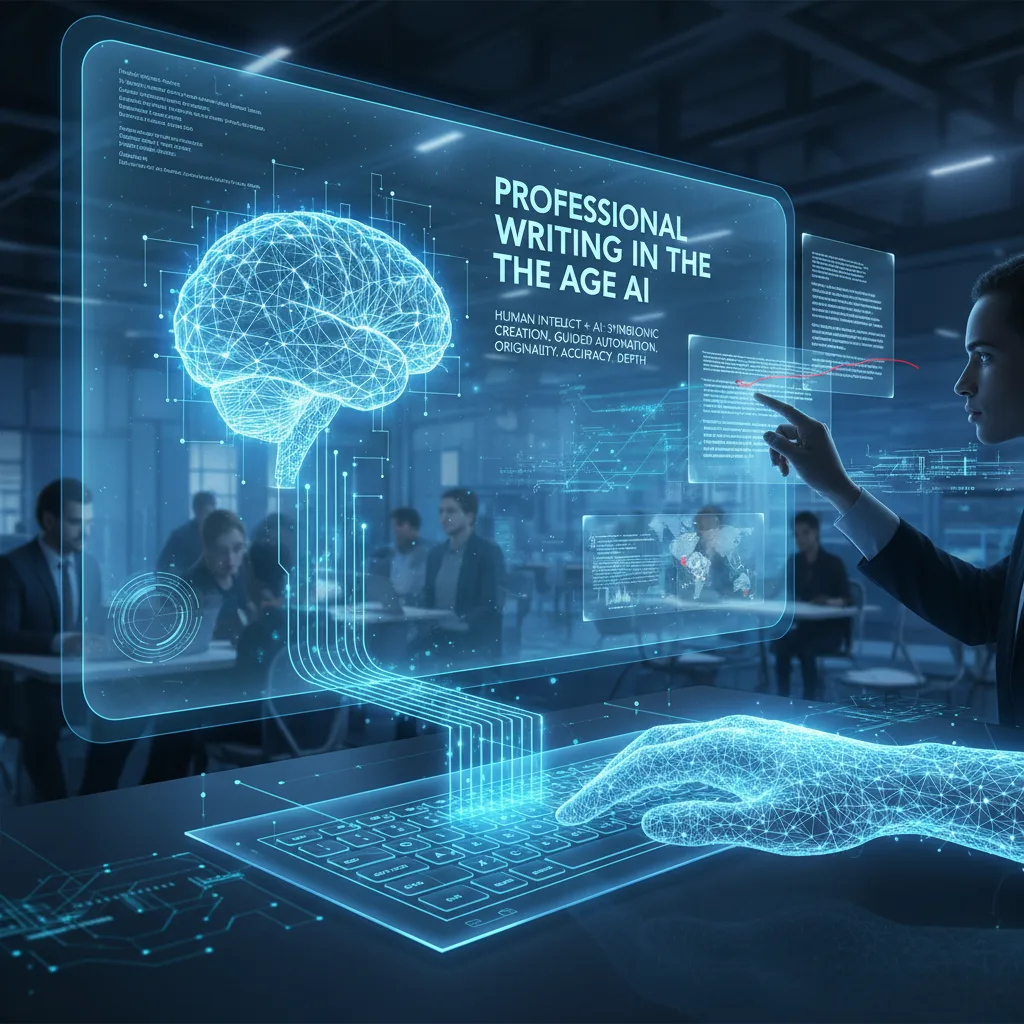
Executive Summary:
- Freelance writer and editor Kaleigh Moore, with 12 years of experience contributing to notable outlets like Shopify, Forbes, Vogue, and Adweek, affirms that AI significantly boosts writing efficiency, especially for routine tasks such as product descriptions.
- Moore, as reported by Practical Ecommerce, highlights that AI tools operate solely on existing information, lacking the capacity for original thought, human interviews, or learning from new experiences.
- The professional writing landscape has demonstrably shifted, with many in-house roles in the past 18 months increasingly requiring strong AI operational skills as a core competency for writers.
- Moore’s preferred AI platform is Anthropic’s Claude, valued for its high-quality outputs and the company’s commitment to ethical AI practices and data privacy.
- Effective AI utilization hinges on developing strong, specific prompts and continuously adapting to new functionalities, where concise guidelines are often more beneficial than excessive data.
- Despite AI’s power, human oversight remains critical for fact-checking AI-generated content due to its tendency to ‘hallucinate’ and for integrating unique human perspectives and interviews.
Table of contents
The landscape of professional writing is undergoing a profound transformation, driven by advancements in artificial intelligence. For seasoned professionals like Kaleigh Moore, a freelance writer and editor with a distinguished 12-year career contributing to prominent platforms such as Shopify, Forbes, Vogue, and Adweek, understanding how a pro writer uses AI has become paramount. Moore’s insights, shared in a recent conversation with Practical Ecommerce, reveal a nuanced perspective on AI’s capabilities and limitations, positioning it as a powerful efficiency tool rather than a complete replacement for human ingenuity. This evolving dynamic underscores a critical shift in the technical-editorial SEO sphere, where leveraging generative AI for content creation requires both strategic application and meticulous human oversight.
Analysis of AI’s Role in Professional Writing
Kaleigh Moore aptly describes AI as a ‘fire hose of information’, acknowledging its remarkable ability to amplify efficiency, particularly for repetitive or tedious writing tasks such as crafting ecommerce product descriptions. This perspective is especially relevant for entrepreneurs and marketers seeking to scale their content production without compromising quality. However, she critically points out that AI tools fundamentally operate on existing data, which is a key distinction from human composition. Unlike a human, AI cannot conduct original interviews, develop new experiences, or generate truly novel insights. This inherent limitation means that while AI can synthesize and rephrase information with astonishing speed, it cannot replicate the unique perspectives, thoughts, and feelings that define authentic human storytelling and analysis. The practical implication for the writing industry is profound: over the last 18 months, there’s been a noticeable shift in job requirements, with many full-time in-house writing roles now explicitly demanding AI operational skills. This trend signifies that proficiency in AI tools is no longer a niche skill but a requisite for career advancement, challenging professionals to adapt and continually learn. Moore’s personal go-to platform is Anthropic’s Claude, which she commends for its superior outputs and the company’s transparent, ethical stance on data privacy and open-source principles. This preference highlights a growing demand for AI tools that not only perform well but also align with professional values, illustrating an important aspect of how a pro writer uses AI responsibly and ethically.
Strategic Implications and Mastering AI for Content Creation
The strategic integration of AI, as demonstrated by Kaleigh Moore, holds significant implications for the broader content creation ecosystem and, by extension, technical-editorial SEO. Moore emphasizes that the quality of AI output is directly proportional to the strength and specificity of the input prompts. Developing advanced prompting skills is therefore a critical competency for any professional aiming to maximize AI’s utility. For entrepreneurs and marketers, generative AI platforms like Claude offer versatile applications, from drafting compelling promotional emails and engaging social media posts to structuring professional LinkedIn articles. These tools can even learn and replicate an existing brand voice and style, provided they are ‘trained’ correctly. Moore explains her method of feeding Claude good, strong examples of her published articles, case studies, and guides, analogous to onboarding a junior writer with specific ‘dos and don’ts’. It is vital to provide clear, specific guidelines, remembering that while AI never forgets, an overload of information can sometimes lead to confusion. This process underscores a crucial trade-off: spending time on a detailed brief often results in a significantly higher-quality output, minimizing subsequent editing. Despite AI’s capabilities, its propensity for ‘hallucinations’ – generating factually incorrect or non-existent data – necessitates diligent human fact-checking. Furthermore, AI cannot conduct interviews or glean insights from direct human interaction, making human expertise indispensable for adding depth, nuance, and authenticity. Ultimately, understanding how a pro writer uses AI is about embracing it as an invaluable augmentative technology that enhances efficiency while preserving the irreplaceable essence of human creativity and critical judgment in the evolving digital content landscape.