
Asics Cuts Misplaced Inventory Recovery 60% with AI Drones
Asics America used AI-powered Corvus Robotics drones at its Mississippi DC to cut misplaced inventory recovery 60% and free 200+ manual hours monthly.
 Carlos Martínez 9 min read
Executive summary
- The Shift: Asics America deployed Corvus Robotics drones in its Mississippi DC, cutting misplaced inventory recovery time by 60% while shifting from semi-annual to continuous cycle counts.
- The Impact: 200+ hours of manual labor are now redirected monthly toward high-value exception handling, not shelf-walking.
- The Risk: If your stock data is 90% accurate, you are likely leaving 10% of potential revenue on the table due to “ghost” inventory blocking real sales.
- The Action: Drones are the hardware solution, but data accuracy is the software problem. Start by auditing your current inventory variance rate.
- The Cost of Inaction: Every hour spent counting is an hour not spent on demand forecasting or customer experience optimization.
Table of contents
Six months to find a single shoe
Imagine this. A customer orders a specific size of running shoe. The system says it’s in stock. The picker walks to the location. Empty. They walk to the next location. Empty. Twenty minutes later, the order is stuck.
At Asics America, that was the standard operating procedure until recently. Kyle Koestler, Senior Director of Distribution and Transportation, put it bluntly: “If a unit went missing, we might not find it for six months.”
That quote isn’t just an anecdote. It’s a symptom of a disease that infects most mid-sized brands and manufacturers. We obsess over speed to ship, but we ignore speed to find. We treat inventory as a static asset sitting on a shelf, rather than a dynamic data point that needs constant verification.
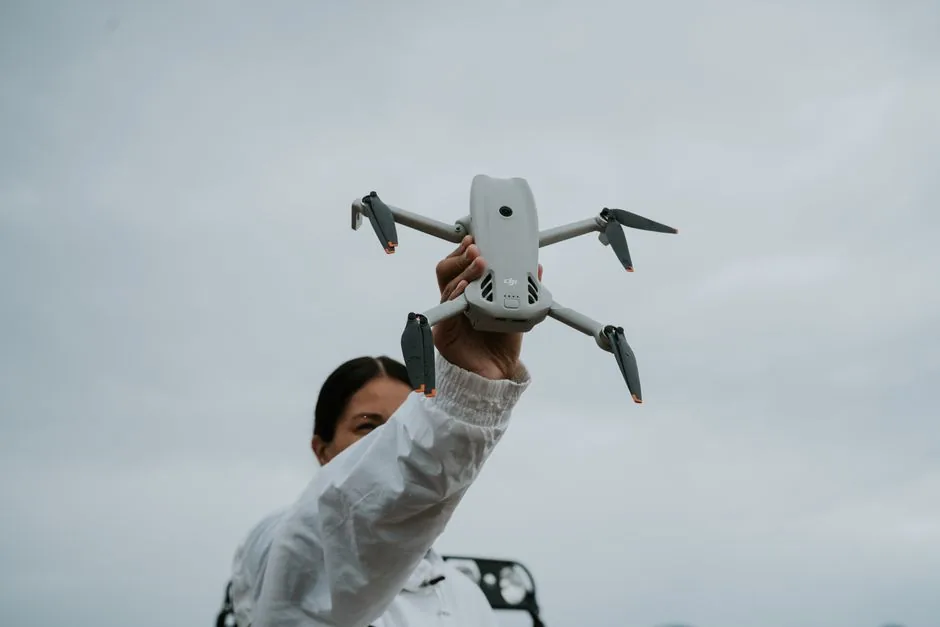
Asics just dropped the hammer on this outdated model. Using autonomous drones from Corvus Robotics at their Byhalia, Mississippi distribution center, they are recovering misplaced merchandise nearly 60% faster. But the drone is just the tip of the iceberg. The real story is about data hygiene.
The math behind the 6x frequency jump
The hardware is impressive. The Corvus One drones fly seven nightly sorties, starting around 19:00. They scan the racks, capture video and images, and log every discrepancy.
But here is the number that should keep you up at night: the frequency of inventory counts has multiplied by six.
Traditionally, warehouses count twice a year. A massive, painful, disruptive event. Asics is now counting continuously. The drones do the walking; humans do the thinking.
In a three-month period, these drones spotted 26 misplaced boxes containing over 200 pairs of shoes. Sounds small? In a DC holding three million-plus shoes, that 200-pair error rate is a silent killer. It’s dead capital. It’s stock that shows as available but isn’t. It’s stock that is there but isn’t found.
Asics reports redirecting about 200 hours of manual work per month. That’s not just “saving time.” That’s 200 hours of highly trained staff no longer walking aisles, but instead solving complex exceptions and researching inventory anomalies from a desk.
This is the shift from operational inventory to strategic inventory management.
Why your current count frequency is a liability
Most brands I talk to still run a “big count” every few months. It’s a ritual. A pain. A tax on productivity.
The problem? Inventory doesn’t pause for your schedule. Mismatches happen daily. Pickers put things in the wrong bin. Returns go to the wrong location. Damage happens. If you only check twice a year, you are flying blind 364 days out of 365.
The drones aren’t just finding shoes. They are exposing the process failures. If a location is consistently wrong, it’s not a drone problem. It’s a slotting problem. It’s a labeling problem. It’s a training problem.
You need real-time visibility to fix root causes. Not a yearly report.
From “finding stock” to “predicting flow”
This is where the conversation usually stops for most CTOs and Ops Directors. “Great, we found the shoes. Now what?”
Now you optimize the flow.
Accurate inventory data is the fuel for demand forecasting. If your system says you have 50 pairs, but you only have 45, your forecasting algorithm is wrong. Your purchase orders are wrong. Your cash flow is wrong.
Asics is using this real-time data to resolve exceptions faster. But the next step is to feed this clean data into your broader commerce stack.
Think about the downstream effects.
- Omnichannel fulfillment: If your online store shows stock that isn’t there, you face cancellations. If your offline store doesn’t know stock is in the DC, you miss a local pickup opportunity.
- Supplier negotiations: If you know exactly what’s missing and when, you can demand better service levels or adjust purchase orders in real-time.
- Customer trust: Fast, accurate delivery builds loyalty. Slow, error-prone delivery kills it.
This is why tools like stock forecasting and multi-channel fulfillment are becoming critical. You can’t forecast what you don’t know you have. You can’t fulfill across channels if your single source of truth is a lie.
The drones give Asics that truth. Your opportunity is to integrate that truth into your decision-making.
200 hours — of manual labor redirected monthly to high-value tasks. Source: Retail Tech Innovation Hub
The “Ghost Inventory” myth
Let’s bust a myth. Most brands think their inventory data is 95% accurate. It’s not.
Industry averages often hover around 90-95% theoretically. But “theoretically” means the system says it’s there. “Actually” means you can find it.
The gap between those two numbers is your “ghost inventory.” It’s invisible until a customer tries to buy it.
Asics’ deployment shows that finding this ghost inventory is scalable. You don’t need to hire 50 more pickers. You need better eyes.
But here’s the contrarian take: Drones are not the magic bullet. They are a sensor. If your WMS (Warehouse Management System) is poorly configured, the drones will just digitize your mess. They’ll find the mistakes faster, yes, but you still need to fix the process.
The real value isn’t in the drone. It’s in the workflow that follows. How quickly do you reconcile the data? How do you update the system? How does that update flow to your Shopify store, your Amazon listing, your website?
If your data pipeline is broken, faster detection just means faster frustration.
What this means for your tech stack
You don’t need a drone in your warehouse tomorrow. That’s a capital expenditure for large-scale DCs. But you do need to audit your inventory accuracy today.
Start with a manual spot-check. Pick 50 SKUs. Go find them. How many are missing? How long did it take?
If it takes more than 10 minutes, you have a problem.
Then, look at your data flow. When a discrepancy is found, how fast does it propagate to your sales channels?
This is where the concept of “full commerce” comes in. Epinium operates as the AI technology partner for brands and manufacturers, building the tech that connects your back office to your front end. We don’t just sell software. We integrate. We automate. We make sure that when a discrepancy is found in the DC, your Amazon listing updates, your Shopify inventory syncs, and your customers get the right information.
We also help you with AI-powered retail search, which relies on accurate product data. If your inventory data is wrong, your AI search results are wrong.
The 15-minute diagnostic
You don’t know where your leaks are. You don’t know if your inventory accuracy is 85% or 95%. You don’t know if your tech stack is ready for real-time sync.
That’s what a diagnostic is for.
FREE SESSION
Stop guessing your stock levels See where your inventory leaks are hiding.
free 15-min diagnostic
FAQ
How much does it cost to deploy warehouse drones?
Costs vary significantly based on warehouse size, ceiling height, and integration complexity. For large DCs, it’s a capital project. For smaller operations, the ROI may not justify the upfront cost without a larger scale. The key is not the drone price, but the labor hours saved and the revenue recovered from accurate stock data.
Can small brands use similar technology?
Not necessarily autonomous drones, but yes to the principle. Small brands can use mobile scanners, RFID tags, or software-driven cycle counting tools. The goal is to move from annual counts to continuous, low-effort verification. The technology level doesn’t matter as much as the frequency of verification.
What is the impact of inventory accuracy on online sales?
Direct. Inaccurate inventory leads to overselling, cancellations, and negative reviews. It also hurts your search ranking because platforms like Amazon penalize late shipments and cancellations. Accurate data means higher conversion rates and better customer lifetime value.
How does this connect to AI and demand forecasting?
AI models are only as good as the data they’re fed. If your inventory data is stale or inaccurate, your demand forecasts will be wrong. Real-time inventory visibility allows AI to adjust purchase orders and promotions dynamically, reducing both stockouts and overstock.
Is this a replacement for human workers?
No. It’s a replacement for manual work. Humans are still needed to resolve exceptions, manage returns, and oversee the process. Asics redirected 200 hours of labor to higher-value tasks. The goal is to free humans from repetitive, low-skill tasks so they can focus on problem-solving.
The end of the “shoe hunt”
Asics isn’t just finding shoes. They’re finding a new way to operate.
The 60% faster recovery time is the headline. The 200 hours saved is the margin. The 6x frequency is the strategic advantage.
For brands and manufacturers, the question isn’t “can we afford drones?” It’s “can we afford inaccurate data?”
The cost of a missed sale is high. The cost of a cancelled order is higher. The cost of a customer who never comes back is highest of all.
Your inventory data is the foundation of your commerce operation. If it’s shaky, everything else shakes with it.
Stop counting twice a year. Start verifying continuously.
SERVICES BY EPINIUM
Build the tech that keeps your stock accurate Join the brands moving faster with integrated AI.
free 15-min diagnostic