Mastering Amazon Seller Central Fees for Margins
Stop losing margins to inbound placement and low-inventory penalties. Learn how to optimize your Amazon Seller Central fees and protect your bottom line.
 Carlos Martínez 11 min read
Executive summary
- The margin squeeze is real: Amazon’s ad revenue hit a staggering $68.6 billion recently, proving that organic visibility is virtually dead and pay-to-play is the new standard.
- Punished for running lean: The dreaded low-inventory-level fee forces you to maintain a strict 28-day supply, creating a brutal balancing act between stockout penalties and FBA capacity limits.
- Pay-to-place logistics: Inbound placement fees now cost up to $6.00 per unit for large items if you refuse to split shipments, fundamentally altering how COOs manage freight.
- Promotions are no longer flat-rate: As of mid-2025, Amazon transitioned Lightning Deals and Coupons to performance-based fees, taxing your sales volume directly.
- The optimization imperative: Brands surviving this hostile fee structure are abandoning manual spreadsheet math and adopting automated optimization to protect their bottom line.
Table of contents
Picture this. You finally hit your Q4 sales targets.
Revenue looks fantastic on the dashboard. High fives all around the office. But then you pull your actual P&L, and your net margin has completely evaporated. Where did the money go? It vanished into a labyrinth of inbound placement charges, low-inventory penalties, and scaling promotion costs that you simply forgot to account for when setting your retail prices.
Your competitors are probably feeling the exact same panic. But the smart ones are moving faster to adapt.
If you manage a brand or direct operations on Amazon today, you already know the brutal truth. The platform is not the “list and forget” goldmine it was a decade ago. Amazon’s fee architecture tightens every single quarter. They are actively pushing the cost of logistics, storage, and customer acquisition back onto your balance sheet. You can either complain about it, or you can build a system to outsmart it.
The hidden cost of inbound placement (and why your freight strategy is obsolete)
When Amazon first rolled out the inbound placement service fee, most sellers assumed it was just a minor logistical tweak. It wasn’t. It fundamentally changed the unit economics of selling on Seller Central.
If you send inventory to a single location, you are effectively paying Amazon to act as your internal freight distributor. We are talking about $0.21 to $0.30 for small standard units, and up to $6.00 for large bulky items. If you send 3,000 large standard units a month to one West Coast facility, you could easily burn through $2,000 in placement fees alone. Annualized, that is enough to wipe out the profit of an entire product line.
To avoid this, you have to split shipments yourself. This drives up your initial freight costs because you are sending smaller, less efficient loads to multiple Regional Inbound Cross-Dock facilities (rIXDs). You have to model both scenarios constantly.
This is exactly why perfecting your product presentation is no longer optional. If your logistics costs are higher, your conversion rate must be flawless to compensate. You cannot afford to pay $1.58 to place a unit in a premium warehouse only to have it sit there because your images are terrible. Using tools like Epinium’s Amazon listing optimization software ensures your catalog converts traffic into actual sales at the highest possible rate, effectively offsetting these aggressive backend logistics fees.
The 28-day trap: Navigating the low-inventory-level fee
Here is where the vast majority of brands get it completely wrong. They think the solution to the low-inventory-level fee is simply to stuff the fulfillment centers with massive amounts of stock.
That is a terrible idea.
If you do that, you trigger massive long-term storage fees and risk hitting your FBA capacity limits. Amazon implemented this fee to penalize you if your historical days of supply (both 30-day and 90-day metrics) drop below 28 days. It is an indirect stockout penalty. They want to ensure regional delivery speeds remain fast, and they are making you finance that inventory buffer.
You are caught in a painful squeeze. Run lean, and you get hit with per-unit low-inventory fees when the product ships. Overstock, and your storage costs destroy your margin while tying up vital cash flow. The only way out is hyper-accurate demand forecasting. You need software that tells you exactly how many units to send and when, down to the day.
$6.00 — The maximum per-unit inbound placement service fee Amazon now charges for large bulky items sent to a single location, forcing brands to overhaul their 3PL strategies. Source: Supply Chain Dive 2024
Why comparing fulfillment models is getting harder
As the fees pile up, you might find yourself questioning your entire operational model. Should you just give up and move to wholesale?
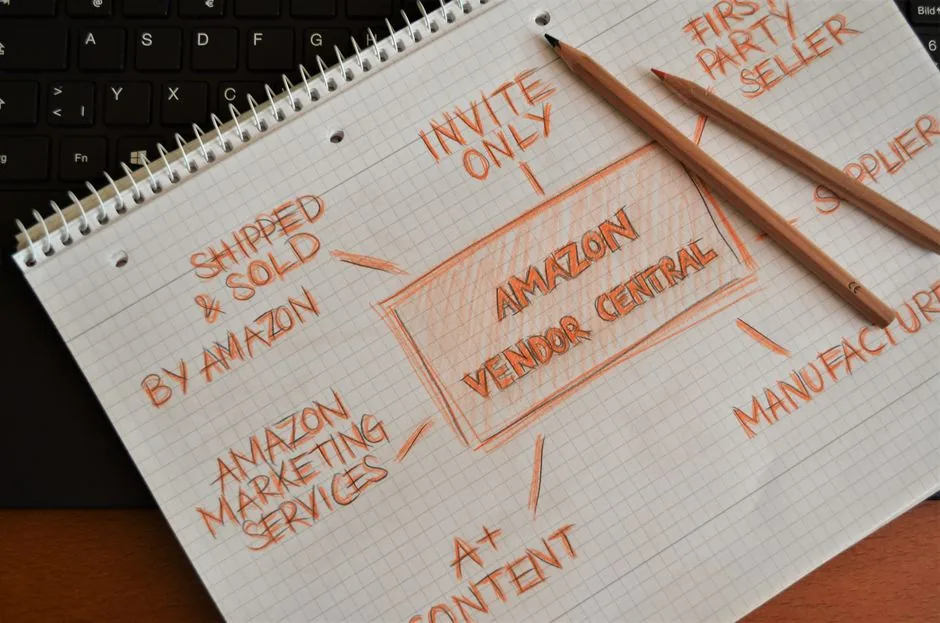
When you evaluate Amazon seller central vs vendor central, the conversation usually revolves around who controls the Buy Box. But today, it is strictly an argument about margin protection. Vendor Central means wholesale pricing and surrendering control over your retail price. Amazon will aggressively negotiate your cooperative agreements and marketing development funds (MDF).
Seller Central gives you total price control, but you absorb every single micro-fee Amazon invents. For most brands, Seller Central is still the more profitable route, provided your COO and CTO can build the data infrastructure required to track these shifting costs in real time. If you are still using static spreadsheets to calculate your FBA fees, you are losing money on every transaction.
$68.6 billion — The total advertising revenue generated by Amazon in 2025, growing 22% year-over-year, proving that organic reach is virtually dead. Source: Marketplace Pulse 2026
| Fee Type | The Old Reality | 2025-2026 Reality | Impact on Margin |
|---|---|---|---|
| Inbound Placement | Free (single location allowed) | Up to $6.00/unit for single location | High |
| Low-Inventory | None | Per-unit fee if <28 days supply | Medium to High |
| Promotions (Deals) | Flat rate ($150-$500) | Performance-based (scales with sales) | High |
| Advertising CPC | $0.70 average | $0.91 - $1.20+ average | Very High |
| Storage | Standard monthly rates | Increased base rates + peak surcharges | Medium |
FREE SESSION
Stop guessing your true Amazon margins. See exactly where you are bleeding profit.
7 days free · no card · your own data
What changed in 2025-2026
The death of flat-rate promotions (June 2025)
For years, running a Lightning Deal meant paying a flat fee, usually around $150 to $500 depending on the season. If your product went viral and you sold $50,000 worth of inventory in four hours, you still paid that same flat fee. That era is over.
Starting in mid-2025, Amazon shifted Lightning Deals, Coupons, and Prime Exclusive Discounts to performance-based fees. The more units you sell, the more you pay the platform. It is a direct tax on your sales velocity. Marketing directors can no longer just tick the “run a coupon” box without running a complex break-even analysis first.
The inbound placement reality (Ongoing 2025-2026)
While officially introduced in early 2024, the true financial impact of the inbound placement service fee didn’t hit most corporate P&Ls until 2025. Sellers realized that shipping everything to one West Coast port facility was quietly destroying their margins.
Supply chain managers are now forced to use third-party logistics (3PL) partners to break down containers and distribute them to multiple Amazon facilities just to avoid the massive per-unit penalties. The logistics game has moved from “how fast can we get it to Amazon” to “how cleverly can we distribute it before Amazon touches it.”
Advertising as a mandatory structural fee
Let’s be honest about what Amazon PPC really is today. Advertising on Amazon is no longer a marketing expense. It is a mandatory structural fee.
With the average Cost Per Click (CPC) hovering around $0.91 and often exceeding $2.50 in highly competitive niches, your Customer Acquisition Cost (CAC) is soaring. You have to factor your Target ACoS into your baseline unit economics, or your business model will collapse. Tools like Helium 10 or specialized ad agencies are fine for research, but automated bid management is now a prerequisite for survival. If you aren’t using AI to daypart your bids and suppress wasted spend on weekends, you are funding Amazon’s server farms for free.
Epinium data: We estimate that brands running catalog-wide automation save an average of 14 hours per week on manual fee reconciliation and listing adjustments, recovering up to 8% in lost net margin.
Frequently Asked Questions
What exactly is the Amazon low-inventory-level fee?
It is a surcharge applied to standard-sized products when your inventory levels fall below customer demand. Specifically, if your historical days of supply (both 30-day and 90-day metrics) drop below 28 days, Amazon charges a per-unit fee when the item ships to the customer.
How can I avoid the inbound placement fee?
You can avoid or drastically reduce this fee by sending your inventory to multiple fulfillment centers (usually four or more) instead of a single location. However, you must carefully calculate whether the increased freight costs of splitting shipments outweigh the savings from avoiding the placement fee.
Did Amazon change how they charge for Lightning Deals?
Yes. As of mid-2025, Amazon transitioned from a flat-rate fee structure for promotions, including Lightning Deals and Coupons, to a performance-based pricing model. The fee now scales directly based on the volume of sales generated during the promotion window.
Is the Professional Seller plan still $39.99?
Yes, the base subscription for a Professional Seller account remains $39.99 per month. However, this is just the entry ticket. The real, substantial costs lie in fulfillment, storage, inbound placement, and advertising fees.
What happens if I just increase my retail price to cover the fees?
You risk losing the Buy Box entirely. Amazon actively monitors competitive pricing across the internet. If you raise your prices too aggressively on Amazon just to cover FBA fees, your listing may be suppressed for violating their fair pricing policies.
Do placement fees apply to large bulky items?
Absolutely, and they are incredibly severe. While standard items might cost a few cents to place, large bulky items can incur inbound placement fees of up to $6.00 per unit if you choose to send them to a single location.
How do I calculate my true profit margin now?
You can no longer use simple math or basic calculators. You must account for unit cost, ocean freight, inbound placement fees, estimated low-inventory penalties, base FBA fees, referral fees, returns processing, and your advertising ACoS to get an accurate net margin.
Are Vendor Central fees rising as fast as Seller Central fees?
While the fee structures look different on paper, Vendor Central margins are also under immense pressure. Amazon negotiates harder on wholesale costs and co-op agreements, effectively squeezing vendors just as tightly as they squeeze sellers with operational fees.
Can a 3PL help reduce Amazon fees?
Yes. Many successful brands now use a Third-Party Logistics (3PL) provider to store bulk inventory cheaply, dripping it into Amazon FBA in optimized quantities. This helps avoid long-term storage fees and prevents you from triggering the low-inventory penalty.
The path forward for brands in 2026
The days of throwing a product on Amazon, turning on an auto-campaign, and printing money are gone forever. The marketplace has matured into a hyper-efficient, highly taxed ecosystem. Every cubic foot of storage and every unit shipped is scrutinized and monetized by Amazon’s algorithms.
But this complexity is actually your biggest advantage.
When the rules become this difficult, amateur sellers and lazy brands get washed out. The brands that survive—and scale—are the ones that treat their Amazon presence like a sophisticated financial operation. By understanding these fees intricately, optimizing your logistics, and ensuring your listings convert at the highest possible rate, you can capture the massive market share left behind by competitors who couldn’t adapt.
Stop letting hidden fees dictate your profitability. Take control of your data, automate your optimizations, and build a margin strategy that actually works for the reality of 2026.
PLATFORM BY EPINIUM
Stop bleeding margin and start scaling profitably. See why top brands trust our AI to protect their bottom line.
7 days free · no card · your own data