
ShipBob Adds Claude AI to Fulfillment Tech Suite
ShipBob embeds Anthropic's Claude AI into its fulfillment tech suite using MCP, enabling autonomous package rerouting and warehouse robot interaction.
 Carlos Martínez 7 min read
Executive summary
- ShipBob just embedded Anthropic’s Claude directly into its fulfillment tech stack via an open-source Model Context Protocol (MCP).
- Unlike typical AI wrappers, this update allows Claude and ShipBob’s native agent “Bobby” to physically reroute packages, upgrade shipping, and interact with warehouse robots.
- The real takeaway for COOs: if your AI cannot execute physical operational changes automatically, it is just an overpriced dashboard.
Table of contents
Most supply chain executives are staring at screens that tell them they have a problem, but do absolutely nothing to fix it. You know the drill. An exception pops up, a package gets delayed, or a stockout is imminent. Your team then spends three hours frantically switching between different software tabs trying to patch the bleed.
Then yesterday happened.
On August 5, 2026, ShipBob announced a massive shift: they turned Anthropic’s Claude into an active participant on the warehouse floor. They didn’t just add a chatbox. They wired AI directly into their execution layer.
The death of the “read-only” AI supply chain
Let’s bust a massive myth right now. Slapping a language model on top of your existing messy data does not make you an AI-first company. It makes you a company with a very articulate reporting tool.
ShipBob CEO Dhruv Saxena hit the nail on the head. A storefront can go AI-ready over a weekend. Supply chains cannot. It involves inventory, labor, and warehouse physics. What ShipBob built with Claude is fundamentally different because they gave the AI read-and-write permissions. If a package is running late, the AI can independently spot the error, decide to upgrade the carrier, and execute the reshipment. No human latency.
This is a brutal wake-up call for brand managers and CTOs. You don’t need more visibility. You need execution. If you are a manufacturer, you should demand that your multi-channel fulfillment and stock forecasting software actually takes the wheel when things go south.
55% — The percentage of Chief Supply Chain Officers who are completely unclear on the ROI of their AI investments, despite allocating 67% of their digital budget to it. Source: Gartner, August 2026
Why MCP is the bridge you’ve been ignoring
The magic acronym here is MCP (Model Context Protocol). Think of it as the universal translator that allows an AI model to securely command external systems.
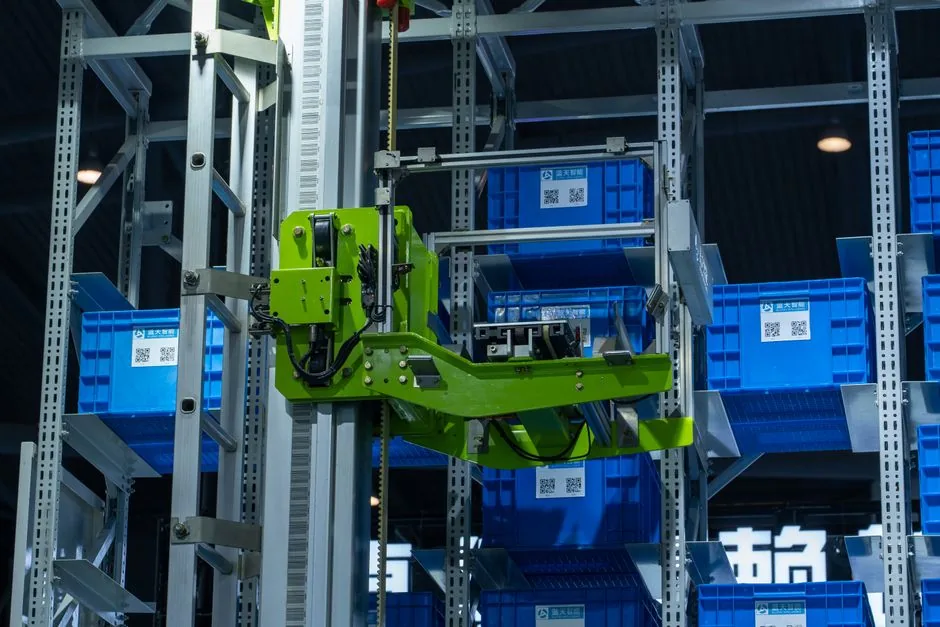
Because ShipBob owns its tech stack end-to-end, their MCP connects straight to real inventory data and autonomous mobile robots. You ask Claude to fix a delayed order, and a robot in Illinois physically moves a box. The physical and digital worlds merge.
This level of connectivity is exactly why we integrated the Epinium MCP connection into our own ecosystem. When you link your operations through this open-source standard, you bypass the clunky, brittle API setups that take engineering teams months to maintain. We’ve seen firsthand how adopting protocols like MCP with Claude 2 completely rewrites how brands interact with live retail data.
FREE SESSION
Tired of AI pilots that never reach production? Let’s map out a strategy that actually executes.
free 30-min diagnostic
The uncomfortable truth about your tech stack
Here is where most leadership teams fail. You buy software that promises to optimize your supply chain. But if that software still relies on your team to click ‘approve’ for every minor adjustment, you are moving too slow.
Gartner data from mid-2026 paints a bleak picture: only 17% of supply chains are actually redesigning their workflows for AI. The other 83% are just bolting it on. And when you bolt it on, the system breaks. The AI might accurately predict a stockout 6 weeks in advance, but if your procurement process still takes 8 weeks of manual approvals, the AI’s intelligence is useless.
Look at major apparel brands like Vuori. They are already using ShipBob’s AI to prioritize daily order shipments without manual intervention. Look at how retail giants are shifting toward agentic commerce using ChatGPT and Claude to automate purchasing decisions. The execution layer is the only thing that separates the winners from the bankrupt.
Epinium data: Brands that shift from “read-only” AI dashboards to action-layer AI reduce manual operational support tickets by up to 64% within the first quarter.
What you need to do tomorrow morning
Stop paying for AI that only talks. Audit your current fulfillment and marketing stack. Ask your vendors one simple, uncomfortable question: “Can your AI execute a change in the physical world without my team clicking a button?”
If the answer is no, you are falling behind. Start looking at agentic architectures. Force your tech stack to communicate. Your competitors are already letting AI handle the heavy lifting while your talent drains away, drowning in Zendesk tickets and manual spreadsheets.
What is Model Context Protocol (MCP) in supply chain AI?
MCP is an open-source standard that connects AI applications to external systems securely. It acts as a bridge, allowing language models like Claude to read live operational data and write commands back to the system, turning passive AI into active agents.
How does ShipBob use Claude for fulfillment?
ShipBob integrated Claude via MCP to act directly on warehouse operations. Instead of just answering questions, the AI can reroute delayed packages, upgrade shipping carriers, and interact with warehouse robots to manage inventory physically.
Why do most AI supply chain projects fail?
Most projects fail because companies bolt AI onto existing legacy workflows. The AI correctly identifies a problem, but the surrounding architecture still relies on slow, manual human approvals, nullifying the speed advantage.
What is the difference between an AI dashboard and an action layer?
An AI dashboard simply visualizes data and flags issues for humans to fix. An action layer gives the AI permission to execute solutions—like placing a reorder or changing a shipping route—without human intervention.
How can my brand transition to agentic AI operations?
Start by auditing your tech stack for read-and-write AI capabilities. Adopt open-source standards like MCP to connect your data sources, and partner with specialized consultants to redesign your workflows around autonomous execution rather than manual oversight.
AI CONSULTING BY EPINIUM
Stop paying for AI that only talks. Build a tech stack that does the heavy lifting for you.
free 30-min diagnostic