
Google Rolls Out Universal Cart in Search and Gemini
Google launches its Universal Cart across Search and the Gemini app, letting shoppers combine items from multiple retailers into one AI-powered cart and…
 Carlos Martínez 8 min read
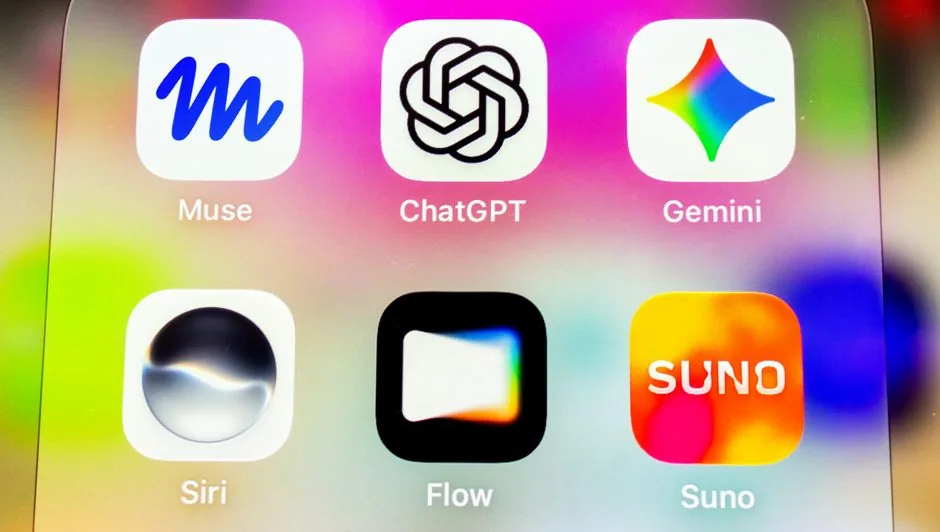
Executive summary
- Google started rolling out its Universal Cart in the US on October 15, 2026, making it available inside both Google Search and the Gemini app.
- The feature is powered by the Universal Commerce Protocol (UCP) and taps into Google’s Shopping Graph, a catalog containing over 60 billion product items.
- Your shoppers can now group items from multiple retailers into a single cart and receive automatic alerts for price drops or restocks.
- Compatible merchants include Nike, Sephora, Target, Ulta Beauty, Walmart, Wayfair, and Shopify stores, changing how checkout flows are routed.
- This isn’t just a convenience tool; it is a shift in where the “consideration phase” happens, moving from your PDP to Google’s interface.
Table of contents
The checkout bar just moved to the search bar
For two decades, the path to purchase was linear. You clicked the ad, landed on your site, added to cart, and checked out. That flow is now fractured. On Thursday, October 15, 2026, Google began deploying its Universal Cart in the United States. As reported by PYMNTS.com, this feature lets users hold items from different stores in one place.
If you are a brand manager or CTO, this should stop you in your tracks. The “cart” is no longer a container on your website. It is a persistent object in the Google ecosystem.
The system runs on the Universal Commerce Protocol (UCP). This is significant. UCP is the underlying language that allows Google to talk to your backend, your inventory, and your pricing. When Google controls the protocol, it controls the conversation.
60 billion items: The data moat you can’t cross
Let’s talk numbers. According to Search Engine Land, the Universal Cart pulls data from Google’s Shopping Graph. That catalog contains more than 60 billion product items.
60 billion — product items in Google’s Shopping Graph feeding the Universal Cart. Source: Search Engine Land
Think about what that number means for your competitors. If your competitor’s data is in that graph, Google can compare their price to yours in real-time. If they drop a price, the user gets an alert. If you restock an out-of-item, the user gets a notification.
This is not a passive feed. It is an active negotiation engine. The user doesn’t need to visit your site to know if you are the best deal. They just need to look at their phone. The friction of “checking out” has been removed from the retailer’s control and handed to the platform.
For CTOs, this raises a hard question: Is your data architecture ready to be scraped, aggregated, and compared in real-time? If your product feeds are lagging by even a few hours, you are invisible in the Universal Cart’s decision-making process.
Two paths, one goal: Keep the user in the loop
The checkout process now offers two distinct routes, as detailed in the Google Blog.
- Direct Payment: The user pays via Google Pay at participating merchants. The transaction stays within Google’s ecosystem.
- Cart Transfer: The user sends the saved items to the retailer’s web store. They complete the purchase on your site.
This dual-path setup is a strategic trap. If a merchant is “eligible” for direct payment, the incentive for the user to leave the Google interface is zero. Why click through to a slow website when you can pay in two taps?
9to5Google notes that integration with Google Wallet allows the platform to suggest payment methods based on credit card rewards and locate applicable discount codes. This is where the rubber meets the road. Google isn’t just listing products; it’s optimizing the financial outcome for the user. It’s telling them, “Use your Amex here, you’ll get 3x points.” That loyalty is now tied to Google’s recommendation, not your brand’s email marketing.
The “Shopkeeper” AI takes control
This feature was first unveiled at Google I/O in May 2026. At the time, it felt like a distant promise. Now, it’s live. The implication is that the “shopper” is no longer a human browsing for fun. It’s an AI agent aggregating needs.
If you’re selling through multiple channels, you need to understand that the Universal Cart treats your inventory as part of a global pool. You are no longer a destination. You are a node.
FREE SESSION
Don’t let Google be the only one talking to your customers Audit your current AI readiness and see where you stand.
free 30-min diagnostic
What this means for your P&L
You might think, “Well, if I’m on Shopify, I’m covered.” And you’re right, partially. Search Engine Land lists Shopify stores among the compatible platforms, alongside giants like Nike, Sephora, Target, and Walmart.
But here is the counter-intuitive truth: Being “compatible” is not the same as being “competitive.”
Many brands assume that if their product feed is up-to-date, they are safe. They are not. The Universal Cart uses price-drop and restock alerts. This means your pricing strategy is now public and transparent in a way it has never been before. If you are dynamic with your prices, you’re okay. If you are static, you will be out-competed by the algorithm.
For COOs, this changes the definition of “operational efficiency.” It’s not just about shipping faster. It’s about how fast your data updates. A 15-minute lag in your product feed could mean missing a price-matching opportunity that directly impacts your margin.
The shift from “Traffic” to “Transaction”
Traditionally, we measured success by traffic. Clicks. Sessions. Now, the metric that matters is “Cart Presence.” If your product isn’t in the Universal Cart’s aggregated view, you don’t exist in the high-intent purchase phase.
This forces a re-evaluation of your CAC (Customer Acquisition Cost). If Google is the primary interface for discovery and consideration, your paid search strategy might be redundant for certain query types. Or, conversely, it might be the only way to ensure you’re the one Google picks when it decides to “direct pay” rather than “transfer.”
You need to know which path your products are taking. Are you being routed to your site? Or are you absorbing the friction of Google Pay’s fees?
Is your data clean enough for the Universal Cart?
This is the question that keeps CTOs up at night. The Universal Cart relies on structured data. If your product titles are messy, if your SKUs don’t match, if your inventory levels are inaccurate, the AI won’t know what to do with your product. It might exclude it. Or worse, it might misprice it.
We’ve seen this before with Amazon. The “A9 algorithm” rewarded clean data. Now, Google’s Shopping Graph is doing the same, but with a broader net. Over 60 billion items means the noise is high. Standing out requires precision.
If you are using legacy systems that don’t push updates in real-time, you are at a disadvantage. You’re not just losing sales; you’re losing visibility.
The role of the AI Director
This is where the concept of an “AI Director” becomes critical. It’s not just about having a chatbot on your website. It’s about having a strategic layer that manages how your brand interacts with external AI systems like Gemini.
Who owns the narrative? If Gemini recommends a competitor because your metadata is weak, who fixes it? Your IT team? Your marketing team? This gap is where brands bleed revenue.
FAQ
Does Google Universal Cart work with my Shopify store?
Yes. According to Search Engine Land, Shopify stores are among the compatible platforms. However, compatibility does not guarantee visibility. Your product data must be structured correctly to be included in the Shopping Graph effectively.
How does the Universal Cart affect my profit margins?
It introduces two payment paths: direct payment via Google Pay or transfer to your website. Direct payment may involve different fee structures than your current checkout. Additionally, the real-time price comparison feature may pressure you to lower prices to remain competitive, directly impacting margins.
Can I opt out of the Universal Cart?
The feature is rolling out as part of Google Search and the Gemini app. While you can control your product feeds, the ability to “opt out” of the entire system is not clearly defined for all merchants. If you are in the Shopping Graph, you are likely part of the ecosystem. You manage visibility through feed optimization, not by opting out.
What is the Universal Commerce Protocol (UCP)?
The UCP is the technology behind the Universal Cart. As noted by 9to5Google, it powers the shopping and payment features. It allows Google to communicate with merchant systems to retrieve inventory, pricing, and payment options.
How is this different from Amazon’s shopping experience?
While Amazon also aggregates products, the Universal Cart is distinct because it operates across Google Search and Gemini, leveraging Google’s 60-billion-item Shopping Graph. It allows users to group items from multiple different retailers (like Nike, Target, and Shopify stores) into a single cart, whereas Amazon’s cart is typically tied to its own marketplace or specific partner integrations.
SERVICES BY EPINIUM
Stop guessing what the AI is telling your customers Join brands that have turned AI from a threat into their biggest growth lever.
free 30-min diagnostic