How to Use a Jewelry E-Commerce AI Image Generator
Scale your brand with a jewelry e commerce ai image generator. Learn how specialized AI models cut photography costs and boost retail margins.
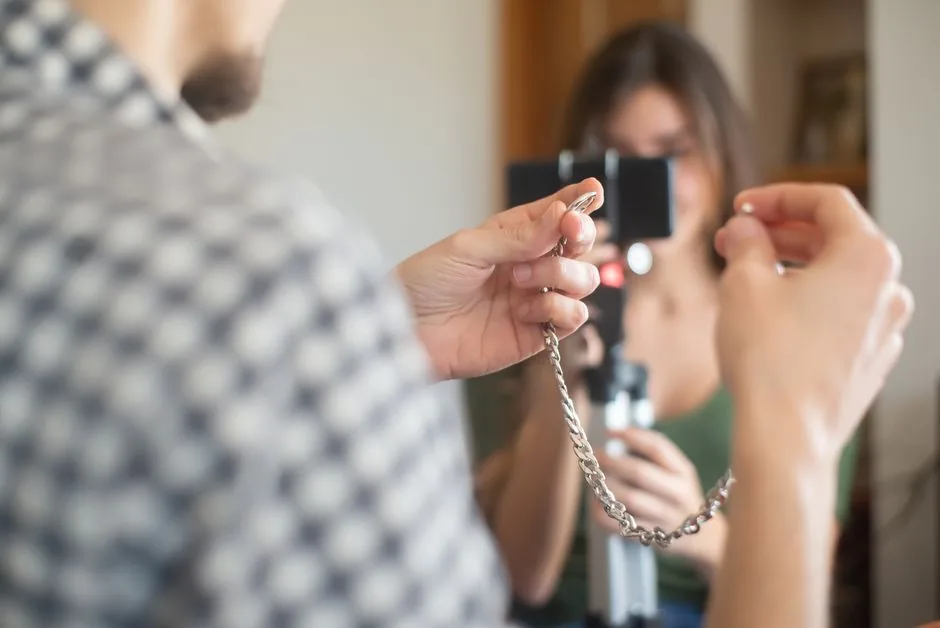
Table of contents
Executive summary
-
Traditional jewelry photography is a margin killer, where a basic macro shoot for ten rings can easily cost $4,000 and stall your time-to-market by weeks.
-
Specialized AI models now preserve complex prong settings, metal finishes, and gemstone clarity perfectly, eliminating the uncanny visual errors of early AI.
-
Retailers integrating generative AI into their operations are seeing massive gains, with projections showing an industry-wide margin increase of up to 1.9%.
-
A jewelry e commerce ai image generator does not erase your brand identity; it scales your visual merchandising volume at a fraction of the traditional cost.
You are staring at a $4,000 invoice for a macro jewelry photoshoot. Ten rings. Three angles each. The photographer took three agonizing weeks to deliver the final retouched files, complaining about the reflections on the white gold the entire time. Meanwhile, a competitor just launched 50 new SKUs with flawless, on-model lifestyle images in 48 hours. They didn’t hire a faster studio. They didn’t compromise on quality. They completely bypassed the traditional photography bottleneck. This is the brutal reality of visual merchandising today. If your team is still agonizing over physical studio lighting setups just to get a clean shot of a solitaire diamond, you are bleeding money. The technology has moved faster than the luxury industry’s willingness to adapt, leaving traditionalists behind.
The Macro Photography Trap (and Why Your Competitors Escaped It)
Jewelry is notoriously hostile to cameras. It reflects everything in the room. It requires massive depth of field for tiny objects. It demands absolute color accuracy so a customer doesn’t return a premium platinum ring because it looked “yellowish” on your product page. Here is where most brand managers get it wrong. They believe that because their product is premium, the production process must be painfully artisanal. That is a myth. The truth is that buyers do not care about the sweat equity behind your product staging. They care about visual clarity and context. Current market data confirms this brutal truth. Research highlights that clear, hyper-detailed product images can increase conversion rates by up to 94%. Customers want to see the item on a hand, on a marble pedestal, in warm sunlight, and against a stark white background. Giving them that variety through physical photoshoots requires an unsustainable budget. You don’t need a $10,000 studio setup and an insurance policy for shipping high-value items to achieve that anymore. You need the right workflow. When you look at the broader shift toward agentic commerce, where AI is your shopper’s first stop, visual data is the only language algorithms truly understand. If your catalog consists of three sterile white-background images per SKU, you are invisible to both human buyers and the AI agents making purchasing recommendations.
$390B
The maximum economic value generative AI is expected to unlock for retailers, representing a margin increase of up to 1.9%.
Source: McKinsey & Company 2023
Generalist vs. Specialized AI: Stop Using Midjourney for Solitaires
Let’s address the elephant in the room. You probably tried prompting a popular AI tool a year ago and got a mutated ring with seven prongs and a diamond that looked like melted plastic. That happens because generalist models prioritize artistic interpretation over manufacturing reality. Midjourney v6 produces visually stunning mood boards, but it has absolutely zero understanding of jewelry construction. It doesn’t know what a bezel setting is or how light refracts through a VVS diamond. It just guesses based on pixel patterns. To actually deploy a jewelry e commerce ai image generator successfully, you must use specialized tools built for the rigorous demands of retail staging. Platforms like Photta and Ecomtent have trained their models specifically on high-converting e-commerce listings. They understand how light interacts with 18k gold versus sterling silver. They allow you to upload a basic flat lay taken with a smartphone and place that exact, structurally accurate piece onto a photorealistic human hand or a contextual lifestyle background. No uncanny valley skin textures. No morphing gemstones. Just perfect spatial awareness. According to Juniper Research, AI-powered tools and conversational agents are projected to save businesses over $11 billion in operations and customer service costs. The savings in visual production are just the tip of the iceberg, but they are the fastest to realize. A brand manager using a specialized AI tool can generate compliant Amazon listings, social media lifestyle shots, and website banners in a single afternoon, completely obliterating the old timelines.
Traditional Studio vs. AI Generation
| Method | Cost per SKU | Turnaround Time | Structural Accuracy |
|---|---|---|---|
| Traditional Macro Studio | $300 - $500 | 2 to 4 weeks | Perfect (Physical) |
| Generalist AI (Midjourney) | < $0.10 | Seconds | Poor (Hallucinates details) |
| Specialized E-commerce AI | $1 - $5 | Minutes | Flawless (Upload preserved) |
FREE SESSION
Stop burning budget on slow photoshoots
Discover how your brand can scale visual production and crush competitors with a tailored AI strategy. Claim your free 30-min diagnostic today.
What changed in 2025-2026: The New Era of Visual Merchandising
The technology didn’t just iterate over the last few quarters; it fractured into highly specialized workflows. What was considered impossible in early 2023 became standard daily practice by late 2025. Here is exactly what shifted.
Contextual Backgrounds Without the Studio (May 2025)
We stopped trying to generate the product from scratch. Instead, image-to-image processing evolved. You now upload a basic, unedited photo of a necklace on a grey table. The AI isolates the product, maps its original lighting, and places it onto a marble pedestal surrounded by soft morning light and silk draping. The physical piece itself remains entirely untouched. Only the environment changes, maintaining 100% product accuracy.
AI Jewelry Try-On (January 2026)
Showing macro details against flawless human skin has always been the holy grail of fine jewelry marketing. Early AI models struggled massively with generating realistic hands, collarbones, and earlobes. By January 2026, specialized tools introduced dedicated try-on features. You map the ring to a specific finger on a generated model, and the AI automatically calculates the correct shadow casting and metal reflection against the chosen skin tone.
Automated Compliance for Marketplaces (March 2026)
Amazon and Shopify have brutal image requirements. White backgrounds, specific aspect ratios, minimum pixel densities. AI image generators integrated automatic compliance engines to fight this friction. Modern tools now generate your lifestyle images and instantly crop, resize, and format them to meet Amazon’s A+ Content guidelines without you having to open traditional editing software once. If you are struggling to keep up with these marketplace algorithms, adapting your digital operations is critical, which is exactly why modern brands are rethinking their entire e-commerce architecture to stay visible.
Epinium data
Brands replacing traditional staging with AI-generated lifestyle backgrounds cut their visual production costs by 78% while increasing their daily SKU output volume by 10x (internal estimation based on client implementations).
How to Implement a Jewelry E-Commerce AI Image Generator Without Losing Your Brand Identity
A common fear among creative directors is that using AI will make their brand look like a cheap dropshipping operation. This only happens if you use default prompts and lazy workflows. Your brand identity is defined by lighting, color palettes, and styling. A high-end luxury jeweler might use deep, dramatic shadows with macro perspectives, while a trendy direct-to-consumer brand prefers bright, candid lifestyle aesthetics. You control this. The machine just executes it. Start by creating a rigid prompt library for your team. Define your brand’s core visual pillars explicitly. If your aesthetic relies on warm natural window light and minimalist props, encode those exact parameters into your negative and positive prompts. Train your designers to use the inpainting tools. If the AI generates a gorgeous lifestyle shot but places a bizarre prop in the background, do not throw the image away. Use region-specific editing to erase the distraction in seconds. The goal isn’t to fire your creative team. The goal is to arm them with a weapon that turns one raw product photo into fifty platform-specific assets before lunch.
Frequently Asked Questions
Does a jewelry e commerce ai image generator alter the actual product?
No, provided you use an image-to-image workflow. Specialized e-commerce tools preserve your original product upload entirely, only altering the environment, lighting interaction, and background.
Can AI handle highly reflective metals like polished platinum?
Yes. By 2026, AI models specifically trained for retail understand how different metals reflect light. They intelligently map realistic reflections from the generated environment onto your product to make the composition look natural.
Will Amazon ban my listing for using AI-generated images?
Amazon actively encourages the use of AI for lifestyle backgrounds and A+ content, provided the main product image accurately represents the physical item being sold and meets their pure white background requirement.
How do I fix AI-generated hands wearing my rings?
Use tools with dedicated ‘jewelry try-on’ modules rather than generic prompt boxes. These platforms use structural control nets to ensure the anatomy is correct and the ring sits naturally on the finger.
What is the minimum input quality required?
You don’t need a DSLR, but you do need even lighting. A modern smartphone photo taken in bright, diffused daylight against a neutral background is enough for the AI to extract and manipulate the product effectively.
Is the copyright of AI-generated lifestyle images protected?
Copyright law regarding AI is complex and varies by region. However, for e-commerce utility images, the goal is conversion, not artistic IP protection. You own the product, which remains the core of the image.
How long does it take for a team to learn these tools?
With proper training, a graphic designer or marketing manager can master the basic workflows in under a week. The learning curve is in understanding prompting and inpainting, not the software interface itself.
Can I generate short video ads from these AI images?
Absolutely. Image-to-video tools now allow you to take an AI-generated static lifestyle shot and add subtle motion, like sparkling gems or moving shadows, perfect for Instagram Reels or TikTok ads.
The brands that dominate the next decade will not be those with the biggest studio budgets. They will be the ones that adapt fastest. Visual content is the fuel that powers every digital channel. If your production line is choked by manual processes, your marketing team cannot test enough creatives, your marketplace listings will look stale, and your conversion rates will plummet. Embracing a jewelry e commerce ai image generator is no longer an experimental luxury. It is a fundamental operational upgrade. Stop watching your competitors move faster than you. Take control of your visual merchandising.
TRANSFORM BY EPINIUM
Ready to scale your visual content without scaling your costs?
Join top-tier brand managers who have slashed production time and boosted conversions with our free 30-min diagnostic.